
The Woodland Period
1100BCE-200CE
The burial site at Adena took place during the Woodland Period. People during this time used the surrounding land to created burial sites for their leaders. These burial sites give insight to life in 300BCE-200CE since these grave sites hold personal belongings of the dead, which can help in learning theor culture and beliefs.
The burial site at Adena took place during the Woodland Period. People during this time used the surrounding land to created burial sites for their leaders. These burial sites give insight to life in 300BCE-200CE since these grave sites hold personal belongings of the dead, which can help in learning theor culture and beliefs.

The Hopewell Culture
100-200CE
Hopewell culture used everday interactions with animals to create figures. This picture gives examples of the figures the Hopewell people created. Till this day we still people still use different styles of pipes; every piece of work has a meaning and for the Hopewell culture they used their everyday interactions and created art.
Hopewell culture used everday interactions with animals to create figures. This picture gives examples of the figures the Hopewell people created. Till this day we still people still use different styles of pipes; every piece of work has a meaning and for the Hopewell culture they used their everyday interactions and created art.

The Woodland Period Hopewell Culture
100-200CE
The Beaver Effigy Platform Pipe was created around 100-200CE these pieces of art reveal the types of animals that exist during this time period and we can relate the same features to our time period. If we go back to the Paleolithic Period where cave paintings were found we can see how that time period and the Woodland period help in today's society to learn about past cultures and help give an understanding to life in 100-200CE.

The Mississippian Period
1070CE
The Great Serpent Mound is an interesting land scape and goes by it's name. The mound's sturcture is in the shape of a serpent, but it is also said that it follows the path of Haley's comet in 1066. The Serpent Mound was during the Mississippian Period and like the Woodland Perios they also used their environment to create this amazing structure that is still looked at to this day.
Hunter's Mural

Fremont People
800-1300CE
This mural is like many cave paintings in the Paleolithic Period they tell a story of the culture at this particular time period. Paintings or drawings can reveal many details about people, animals, and life in the past. Learining about the past can help us comparepast culture to present day culture and see how similar or differnet we have become.
Haley's Comet

Example of Haley's comet in 1066
The Mississippian Period
The Great Serpent Mound is said to have been the result of Haley's comet's pathway. This monument gives us an idea of how old the earth is and how long Haley's comet has been around. The Mississippian period used astronomy to create many structures such as, the Sun Dagger in Chace Canyon which could have been used to track time in the day a modern day clock for us.
Fremont People
800-1300CE
This mural is like many cave paintings in the Paleolithic Period they tell a story of the culture at this particular time period. Paintings or drawings can reveal many details about people, animals, and life in the past. Learining about the past can help us comparepast culture to present day culture and see how similar or differnet we have become.
Haley's Comet
Example of Haley's comet in 1066
The Mississippian Period
The Great Serpent Mound is said to have been the result of Haley's comet's pathway. This monument gives us an idea of how old the earth is and how long Haley's comet has been around. The Mississippian period used astronomy to create many structures such as, the Sun Dagger in Chace Canyon which could have been used to track time in the day a modern day clock for us.

The Florida Glades Culture
1000CE
Is an example of the art work that was created during this time period. The structure was in pieces when it was discovered, but to find an artifact we are able to see and study the material used during this particular time.

Cahokia
900-1500CE
Monk's Mound relates to astronomy in that it is aligned with the sun and the equinox. This structure looks like just a simple hill, but it was important in the planting and harvesting. Methods were created out of the environment that mother nature created to help maintain life. The land allowed people to plant or harvest crops and nature told people when to plant or harvest their crops.
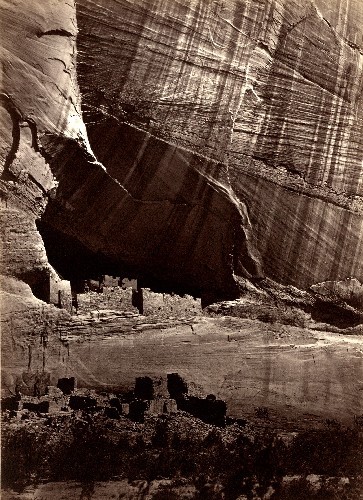
Timothy O'Sullivan 1873
Ruind in Canon De Chelley
This ancient ruins are found in Arizona and it looks like a small community that sheltered people. These ruins symbolize a culture that required protection. With the height of the cliffs others couldn't reach the Pueblo people they were secure from danger of others as well as the weather. Like now we find shelter in buildings, under trees, anything with a top and the Pueblo people found their shelter in the openings of cliffs.
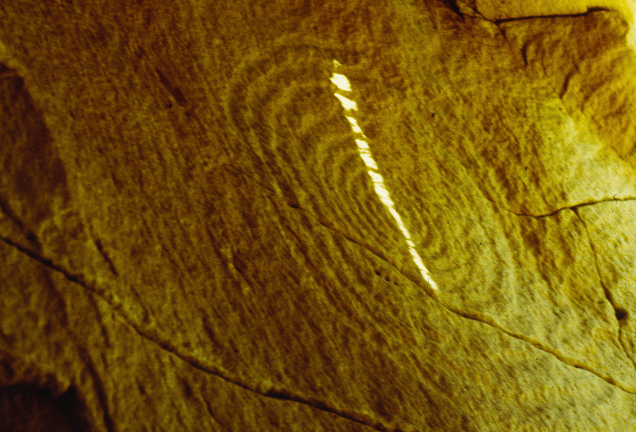
The Mississippian Period
Chaco Canyon, New Mexico
850-1250CE
The Sun Dagger was also created in the Mississippian period and resembles a modern day clock. The Mississippian people found their own way of telling time by using the sun and a wall of rock. In San Antonio the Institute of Texan Cultures have structures outside of the wall that show the shadow of horses when the sun sets right on top of the structures, similar to the Sun Dagger.
